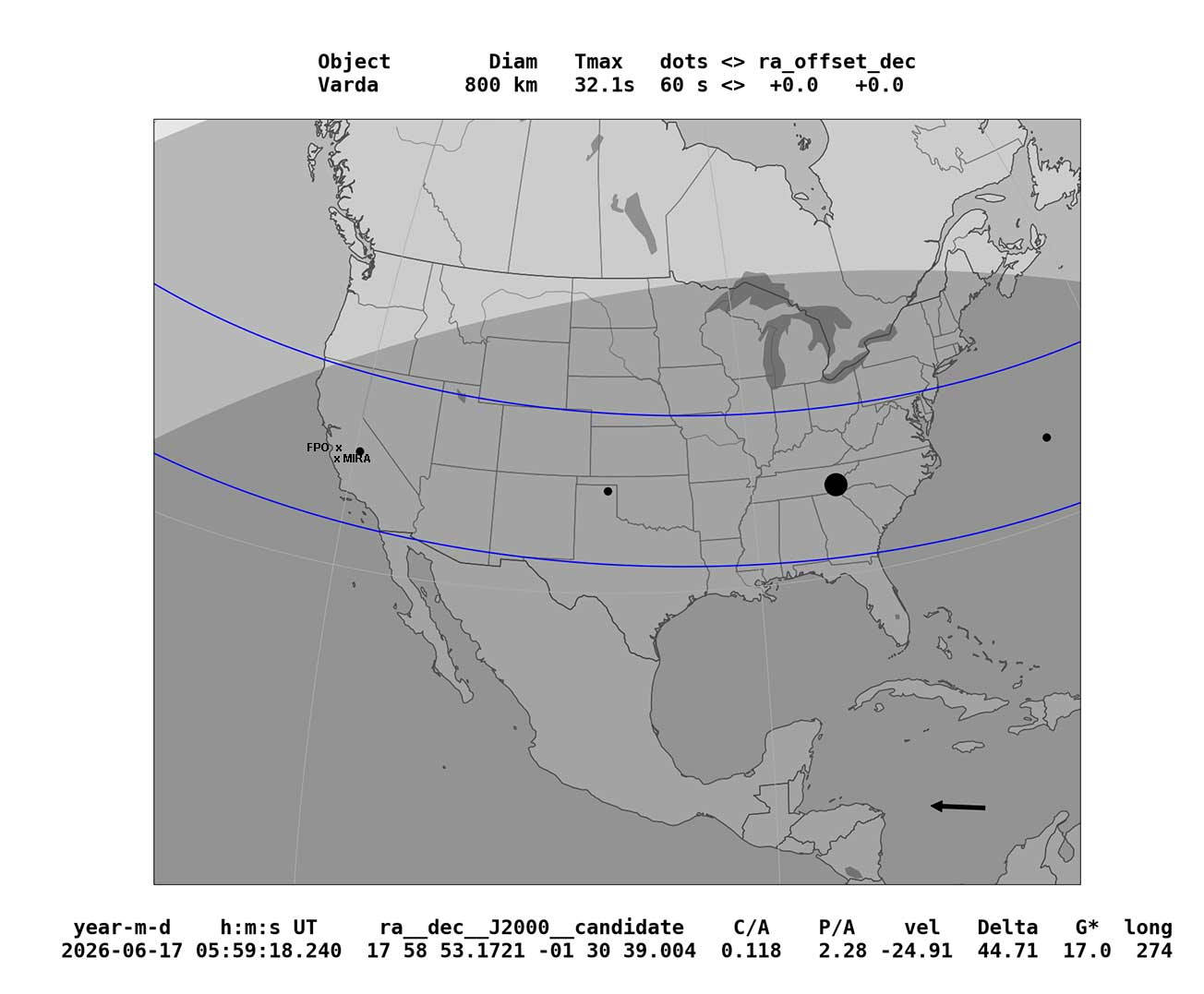
This is the LuckyStar -NIMA path, includes all of California
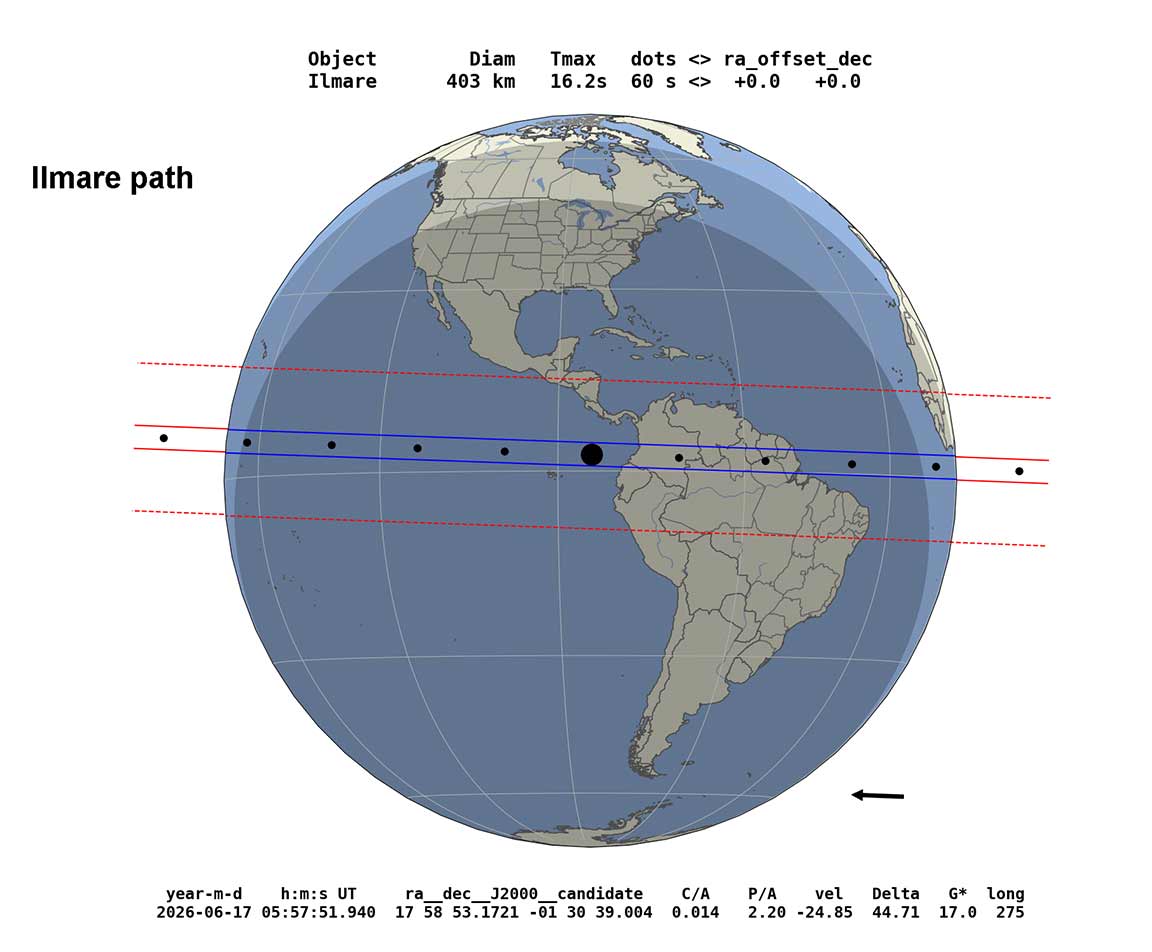
Varda's moon Ilmare, path is far south
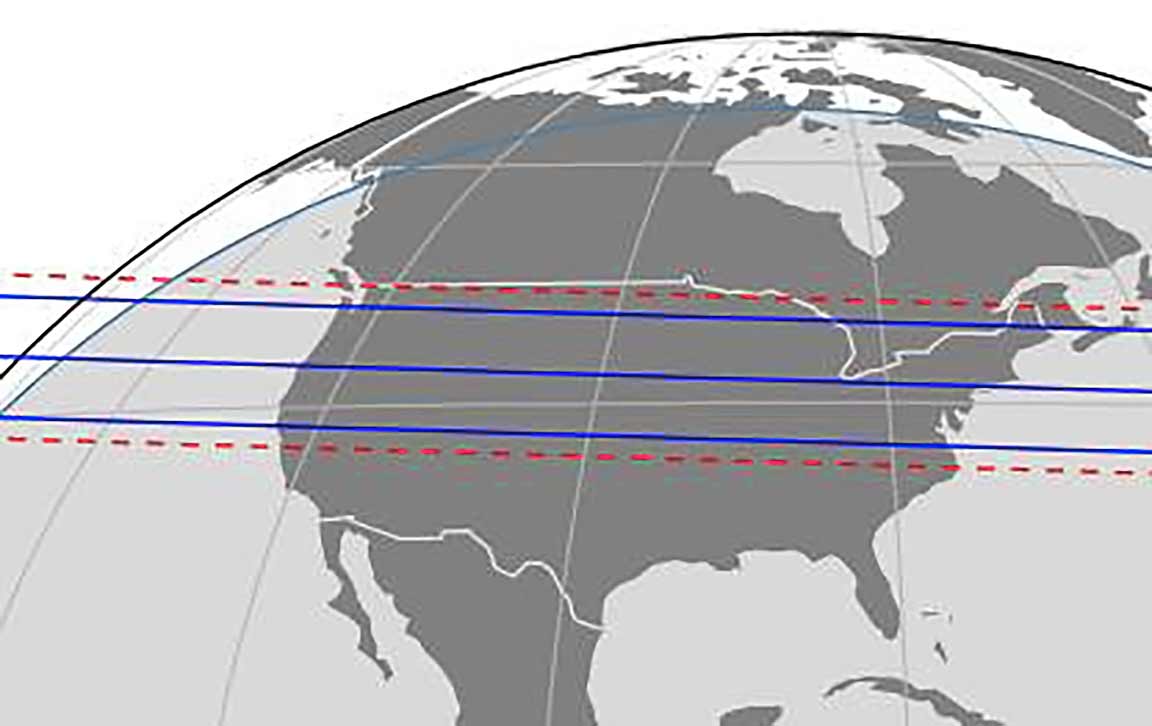
The more northern JPL path, which Ben feels may be the favored one. The accuracy limits seem likely to be worse, I'm guessing.
This object is a special research project of Ben Proudfoot, and the Wiki article summarizing what's know about this object shows that despite being a known binary, there are important uncertainties and degeneracies in the solutions to key parameters and therefore its history. The elongation as a triaxial ellipsoid is uncertain, as is the density and there is mention of only 1 stellar occultation having been observed so far.
Ben Proudfoot relates on the IOTA Message board: "Varda is a particularly compelling target as one of my recently accepted papers (and now available on arXiv) found that Varda’s elliptical limb was pointed towards its satellite during a 2018 occultation. We think this means that Varda has an elongated shape that was 'frozen-in' from before it eventually tidally locked to its satellite. The alignment with the satellite could be a coincidence, so we need to catch another occultation to confirm it."
There are two ephemeri available. The one from JPL is thought by Ben to be the more reliable, but does not include stellar occultations. The LuckyStar /NIMA orbit does include the stellar occultation. One path has the Bay Area just outside the southern limit. The Lucky Star orbit has Santa Cruz on the centerline. The moon Llarma is known well enough to be pretty sure it's well south of the U.S. and not in play for us. Fremont Peak Observatory is a good compromise, being just a bit south of the southern limit of the northern path, and centered well on the southern path.
Of Date:
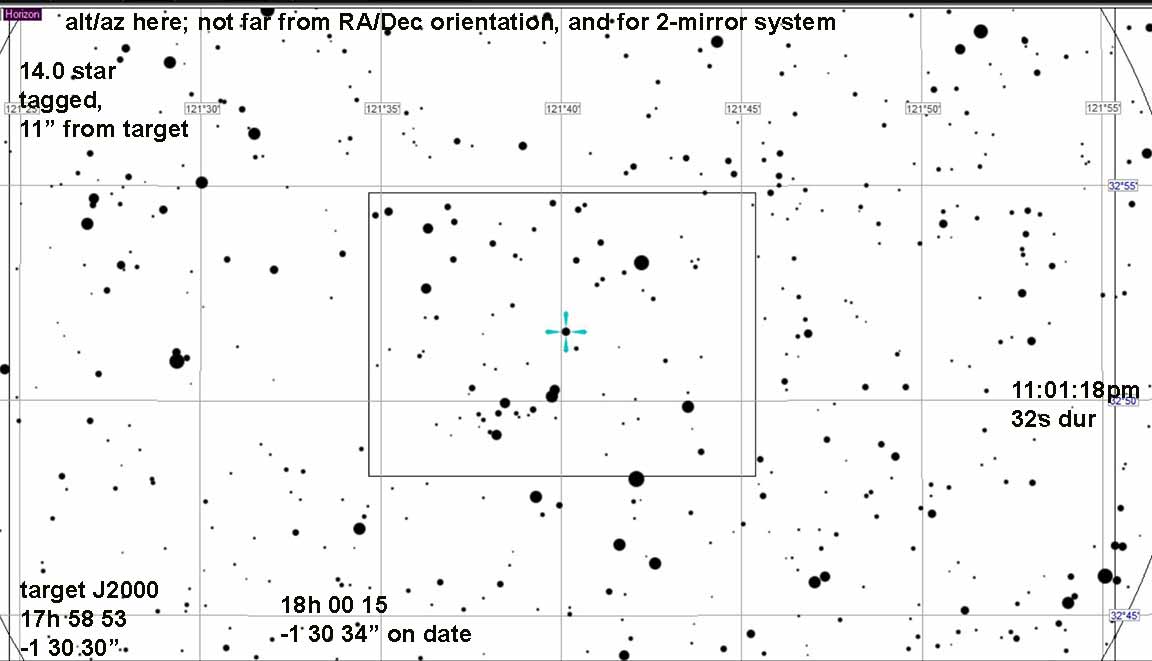
target is at RA=18h 00 15s, Dec= -1 30 35"
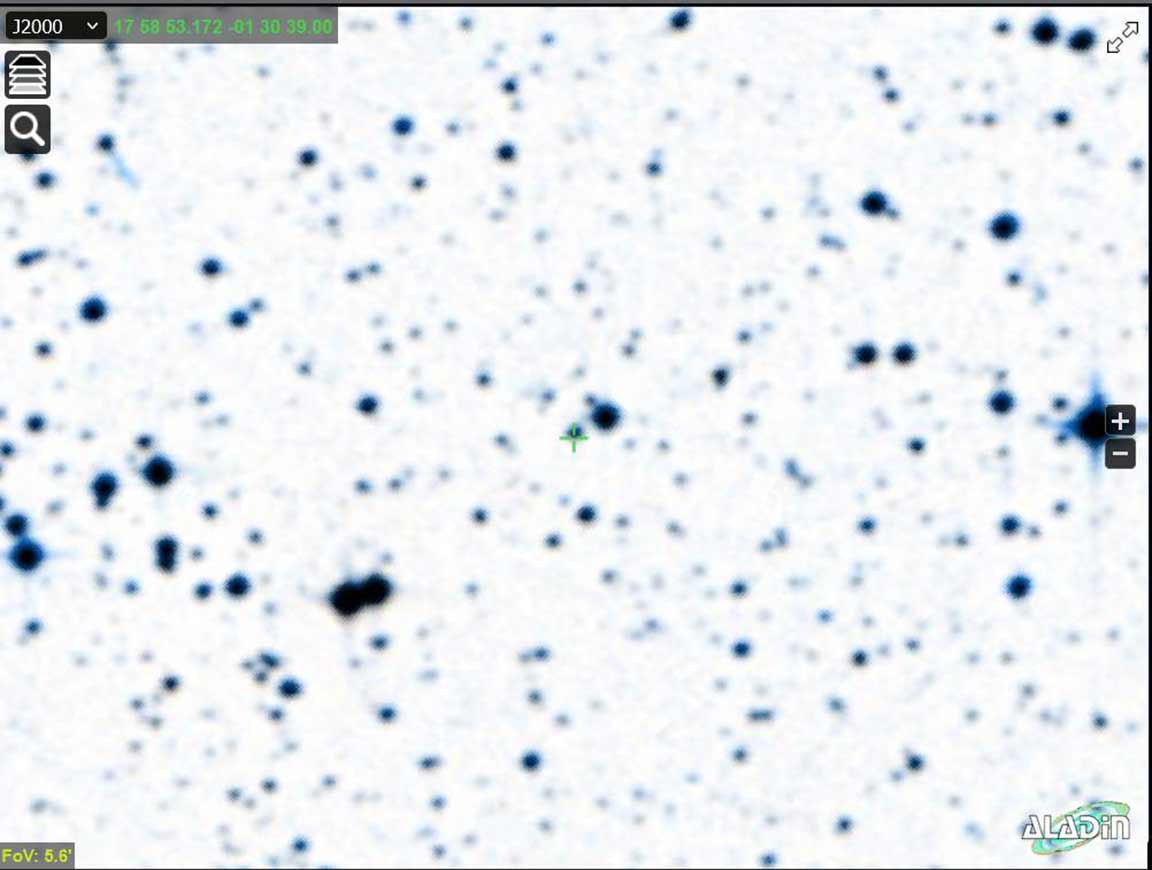
Alt=32, Az=121 and is 11" away from UCAC4 443-077614 which is shown on the finder charts with the cross. Target is not in UCAC4.
This is the LuckyStar -NIMA path, includes all of California |
Varda's moon Ilmare, path is far south |
The more northern JPL path, which Ben feels may be the favored one. The accuracy limits seem likely to be worse, I'm guessing. |
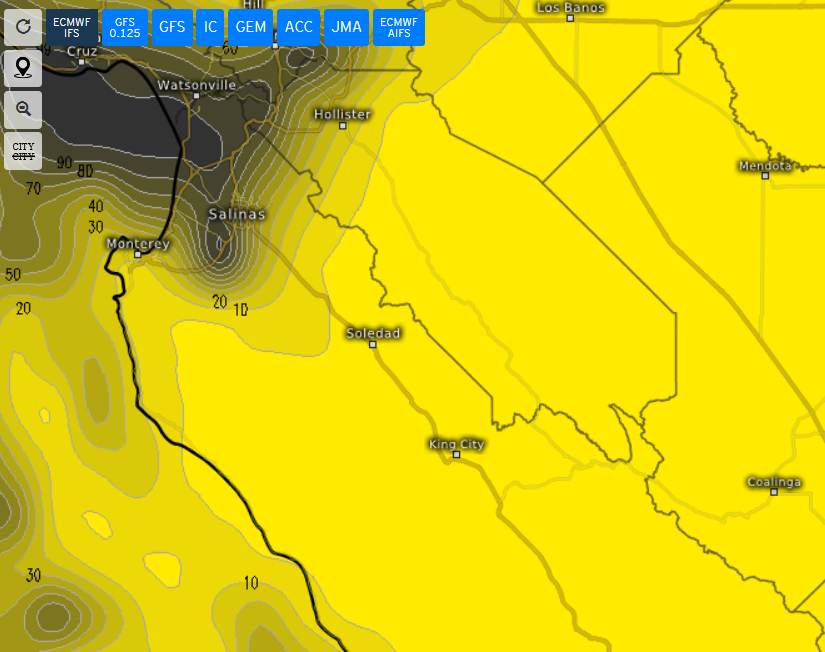
Ted Swift points out that we may be able to gain about a magnitude of observability by using the 3DNR feature on the Watec's. This smoothes over pixels and over time to dramatically reduce sky and time noise and give a much smoother background. I've not yet experimented with this on my Watec but I did view it on the PC 165DNR at Cabrillo Observatory and indeed it does smooth the sky quite well. Given the full duration estimate of 32s, even 4s integrations and perhaps using 3DNR as well, may give enough, using adjustments on the IOTA VC 2.4 capture brightness/contrast, to get this even on an 8SE scope? That's a wild guess at this point. The 30" at Fremont Peak should be able to get this decently well with 1s integrations
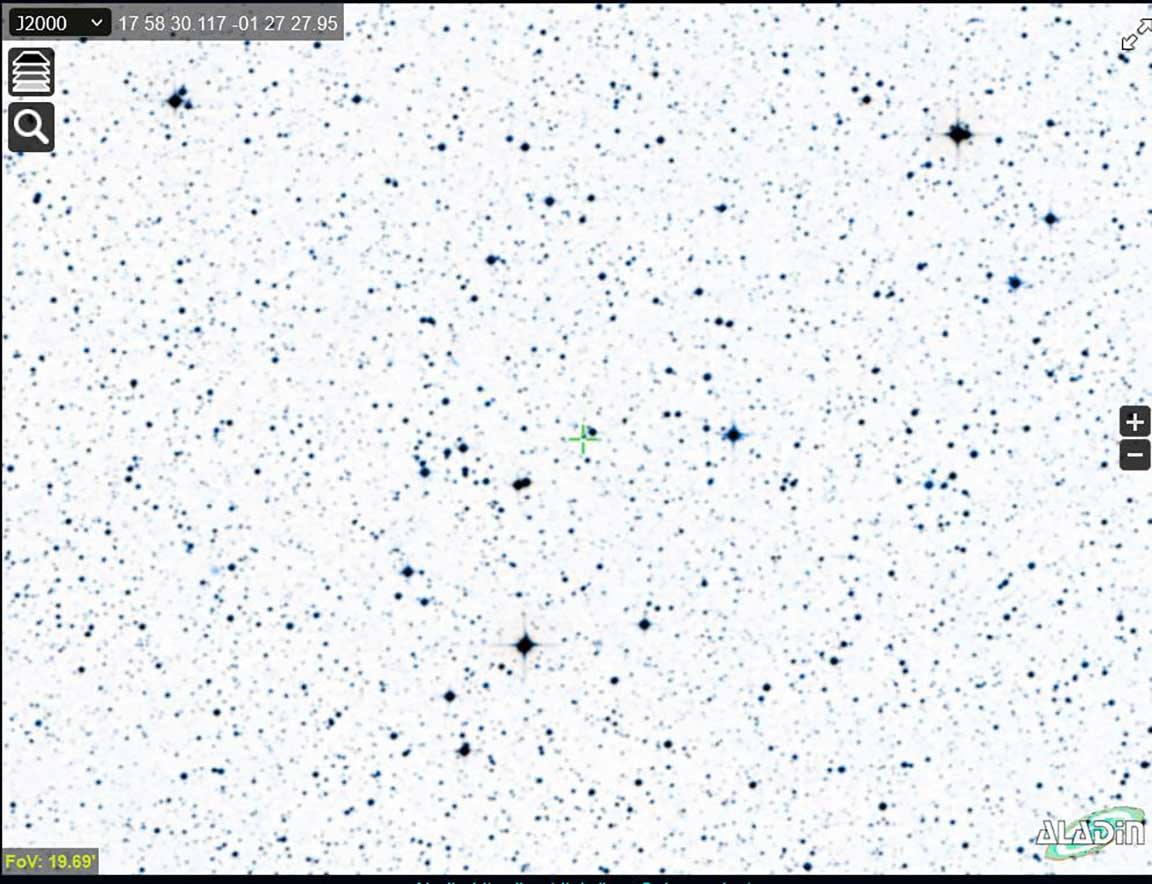
Diagonal dimensions 19 arcmin, about equivalent to our 8SE field in equatorial mode, with f/3.3 reducer. |
5.6' diagonal field, Aladin. Closer to what the Fremont Peak 30" would see on-chip. The bright star to right of target is UCAC4 443-077614 |
C2A chart for 2- mirror system, oriented alt/az but not far from RA/Dec orientation. Inner box is still likely bigger than chip in FP 30". |
June 12 - Chris Angelos has agreed to open up the Fremont Peak 30" so we can get the occultation from there. The charts above are only guesses for relevant sizes to help ID the field.
June 14 - Dan Cotton and Jean Perkins confirm we can also use the 36" at MIRA - OOS on Chews Ridge. Current plan is for me to go to MIRA and Kirk Bender to go to Fremont Peak.
Observability:
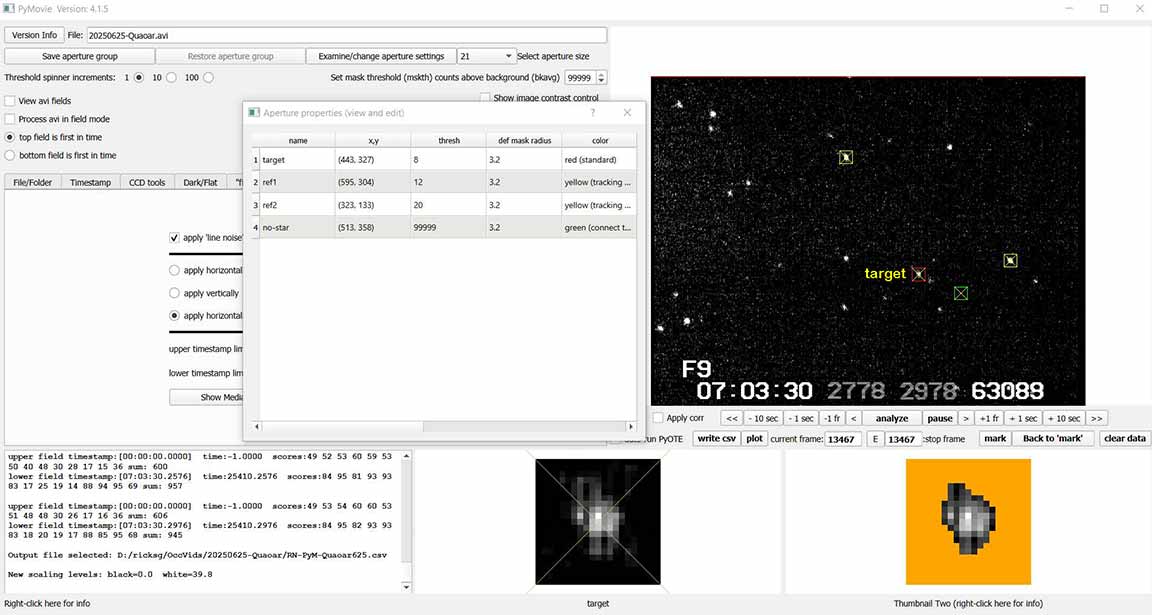
The target is W=16.6 magnitude, compared to W=14.5 for the Quaoar occultation on the 36" at MIRA at f/10. The Challenger 30" at FPO is f/4.8, so star images should be only 40% as large in diameter, concentrating more light into an area only 16% of the area of the star image linked here for the Quaoar June 25, 2025 event
https://www.dr-ricknolthenius.com/events/20250625-Quaoar/RN-PyM-SC.jpg
Therefore, for an equivalent star, the pixels will be illuminated 6.25 times brighter. But the target however is only 14% as bright. So the pixels will be 6.25 x 0.14 = 0,875 times as bright. So picture the star image linked above but dim the pixels a tiny bit, and make the star image only 40% of the diameter seen. That data was taken at 16x setting. We can easily get great data at 1s cadence, given the 32s predicted duration, so that's 64x setting or 4x more light per pixel. 32x might be a good compromise to get good resolution and adequate brightness of the star, as a guess, for equivalent good sky conditions as we had at MIRA.
Weather prediction as of June 14 4pm looks for fog in low elevation regions. This will help darken the skies at both FP and MIRA-OOS.