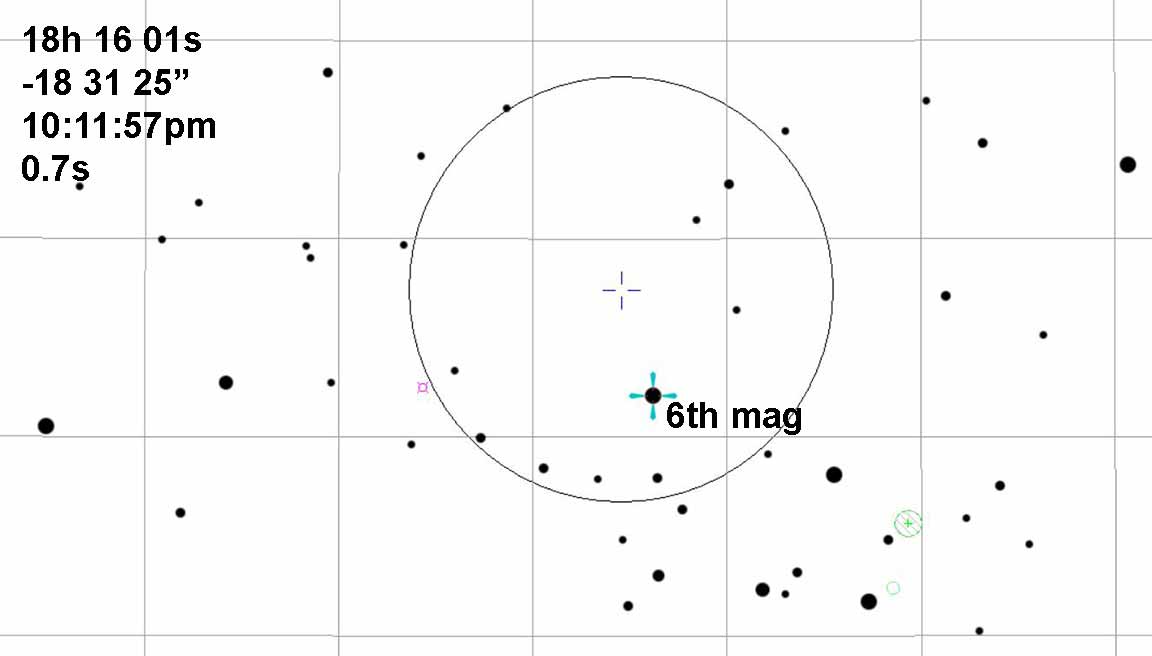
This is a decently bright event, but will be a bit challenging because it is low and rising in the east, and so will require efficient getting-on target. The altitude is 11 degrees - pretty low. The star will therefore look dimmer; it should look like a 12.2 star at more typical good altitude of 55 degrees would. 12.2 is still good, and should be doable at 2x or 4x.
Alt=11, Az=123 in Sagittarius. The rest of the constellation will be below the horizon. The star is about 25 degrees left and a bit down from Antares.
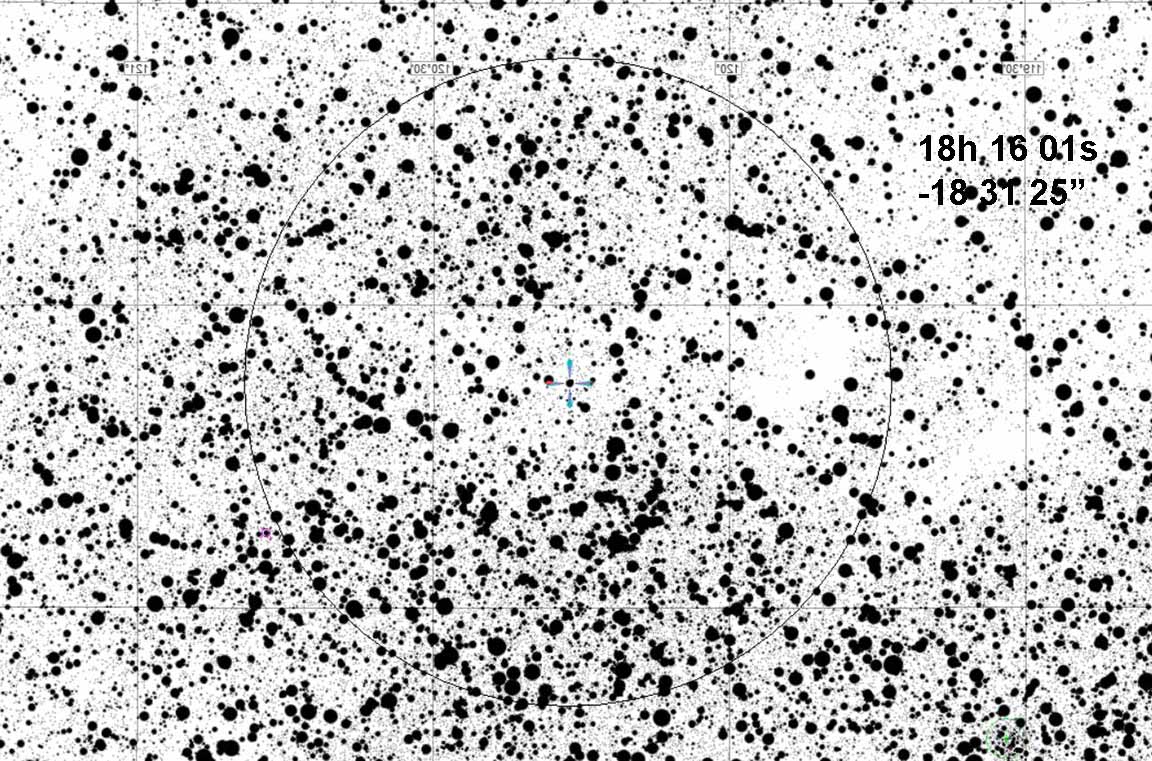
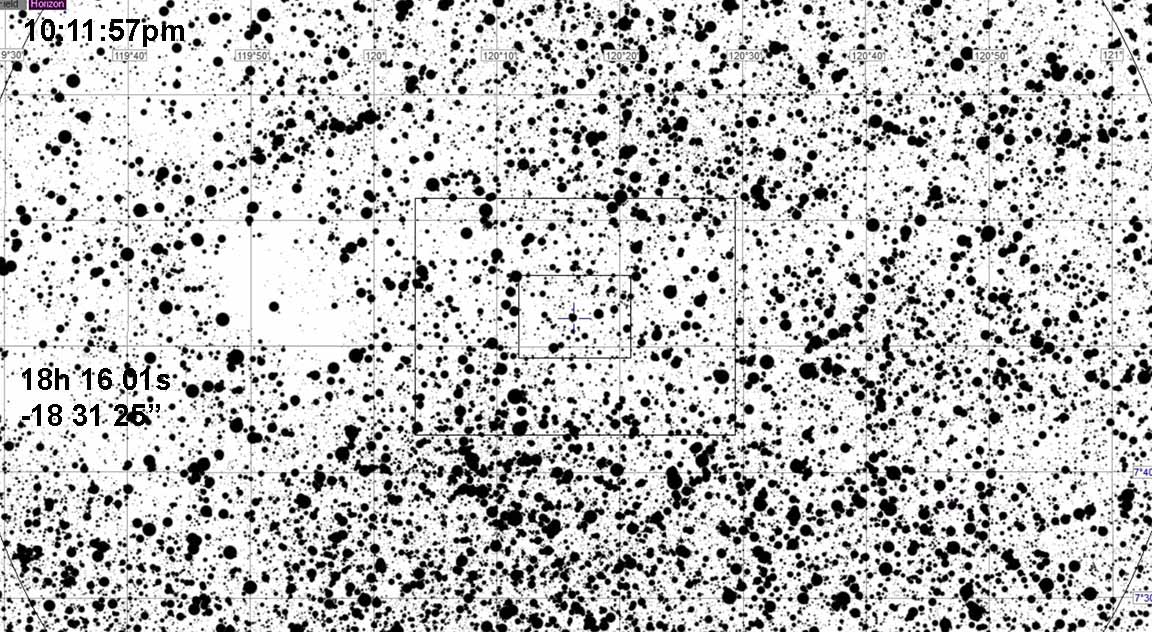
There's a bright 6th magnitude star in the eyepiece field. It's a VERY crowded field of stars, so I made two eyepiece charts
|
|
|
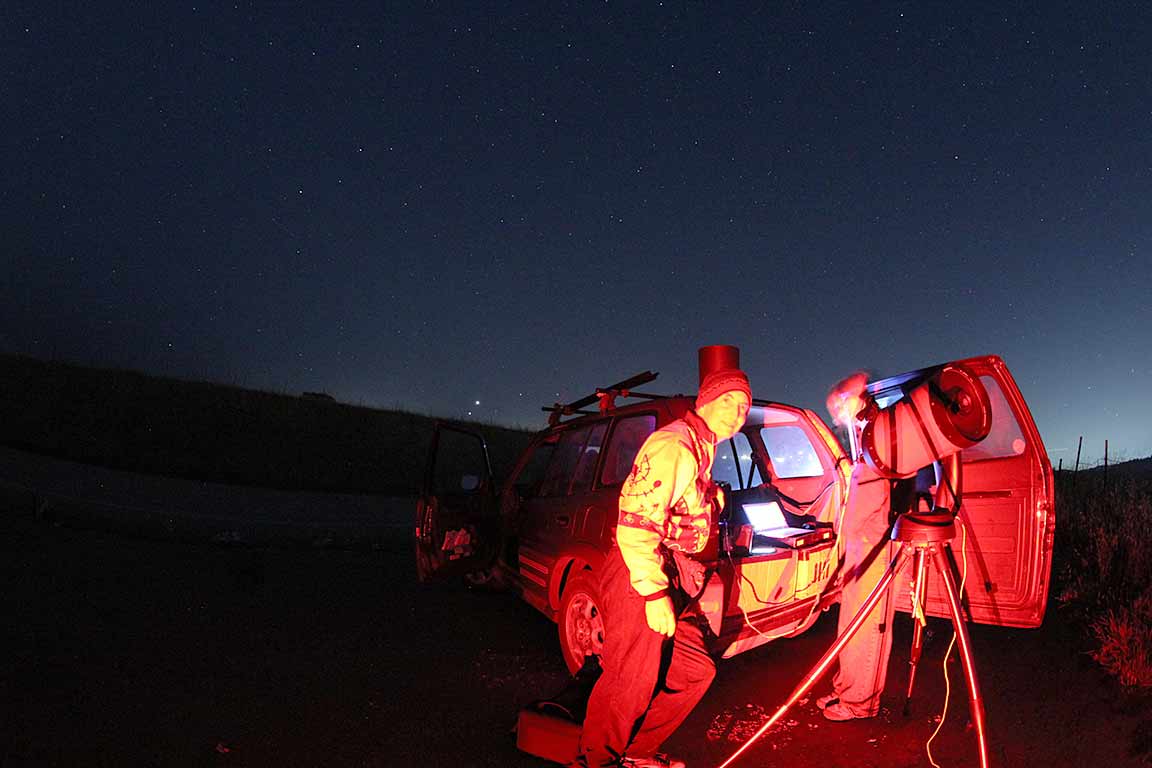
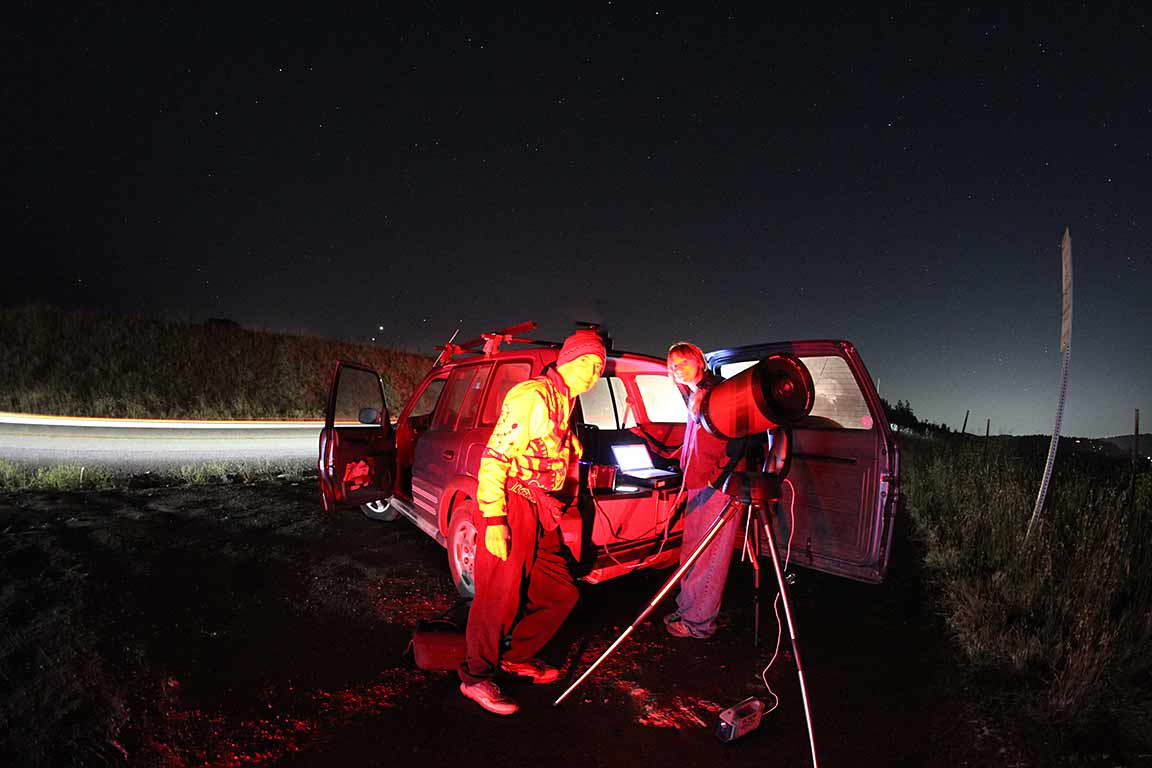
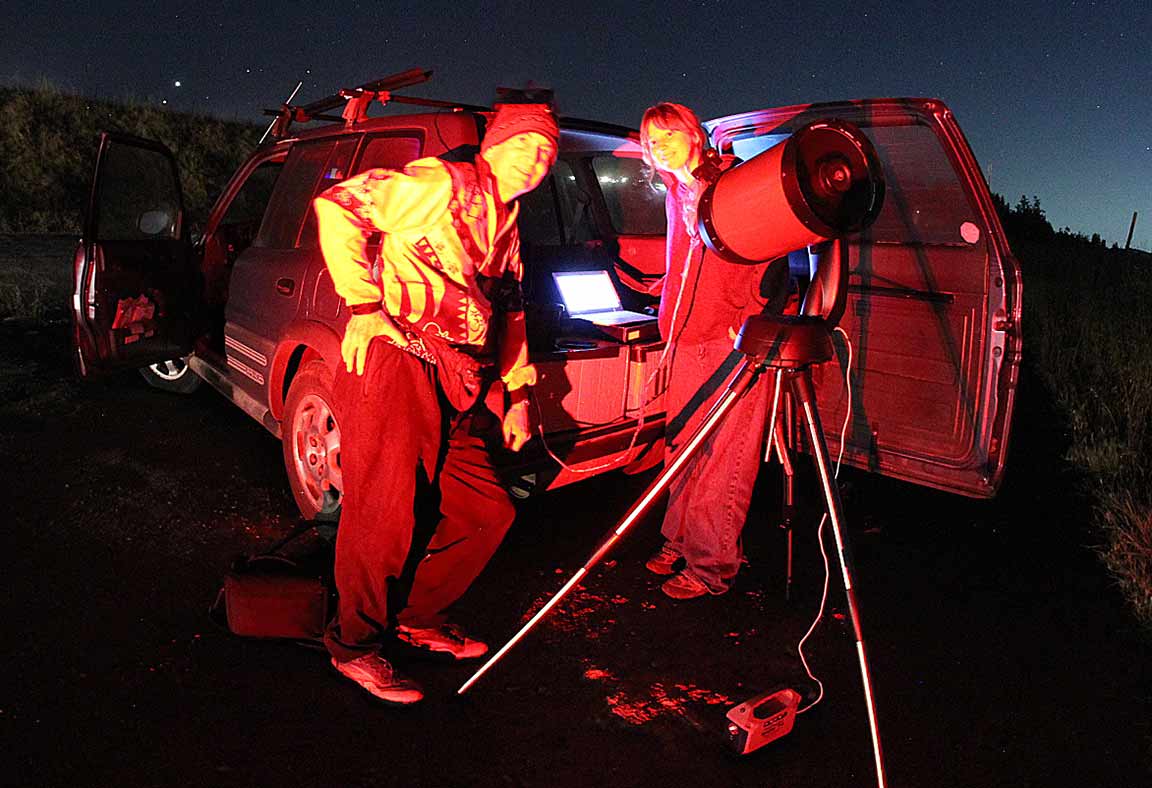
Only Kirk and I tried this one. Karl was not close enough to the path to make an attempt worth while. Danika joined me, to help learn the set up process and hopefully see a good get.
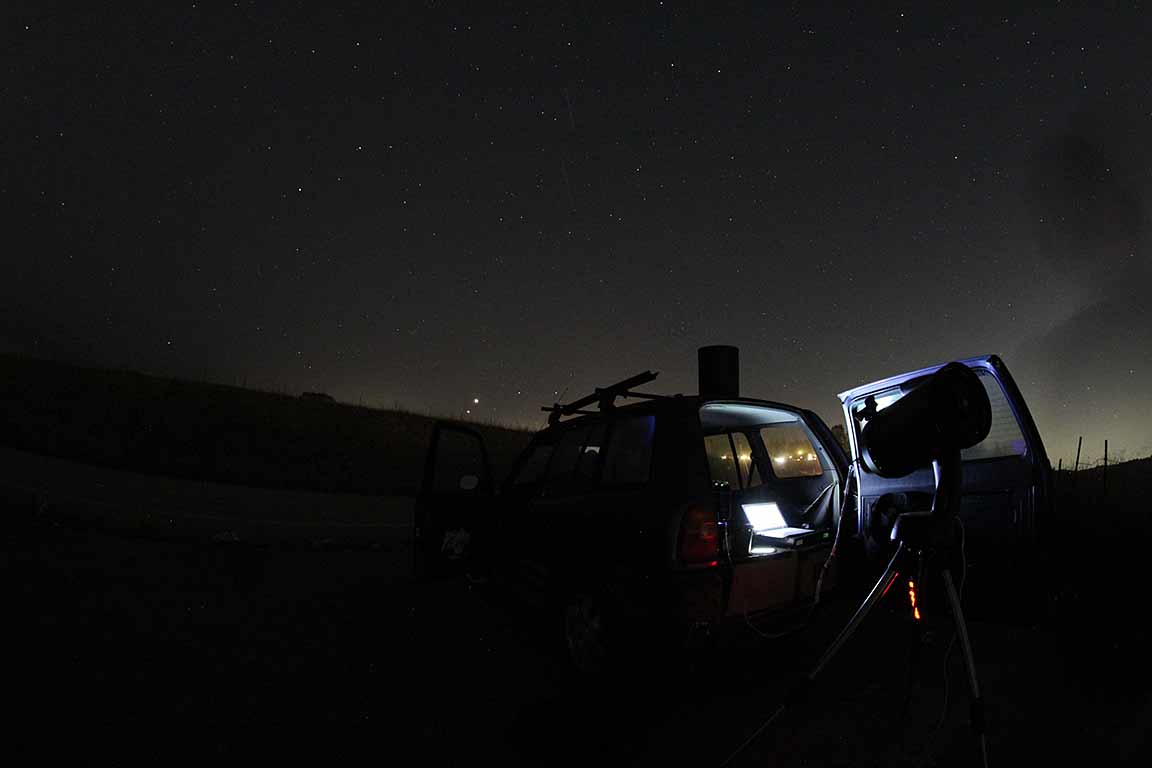
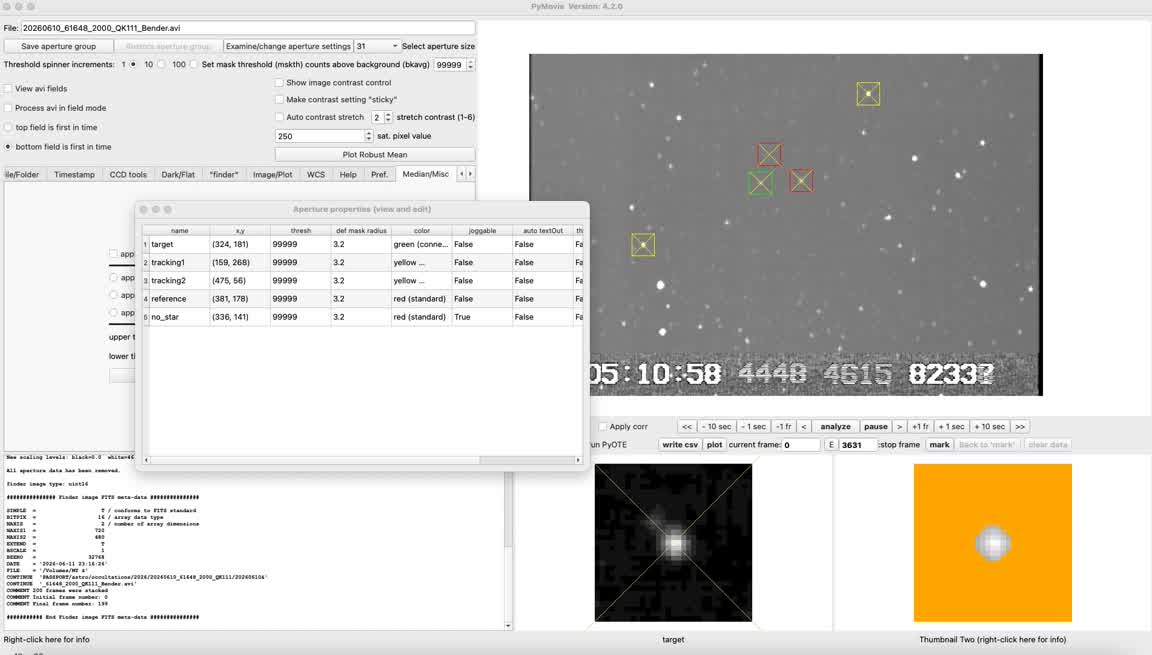
I set up at the Pogonip Overlook dirt parking area on the perimeter of UCSC, along with Danika. I got a successful 2-star align; Denebola and Antares. The key star to locate was the bright 6th magnitude star in the eyepiece field. I had about 15 minutes to try and identify the field, and failed. I could not recognize any of the many stars and asterisms in the eyepiece, but I had at one point a belief that I was looking at the right field, and the put in the Watec 910hx. I searched for something recognizable, without success. There were enough stars that I could find some patterns that seemed promising, but were missing key stars nearby. I ended up recording, but unlikely I was on the right field.
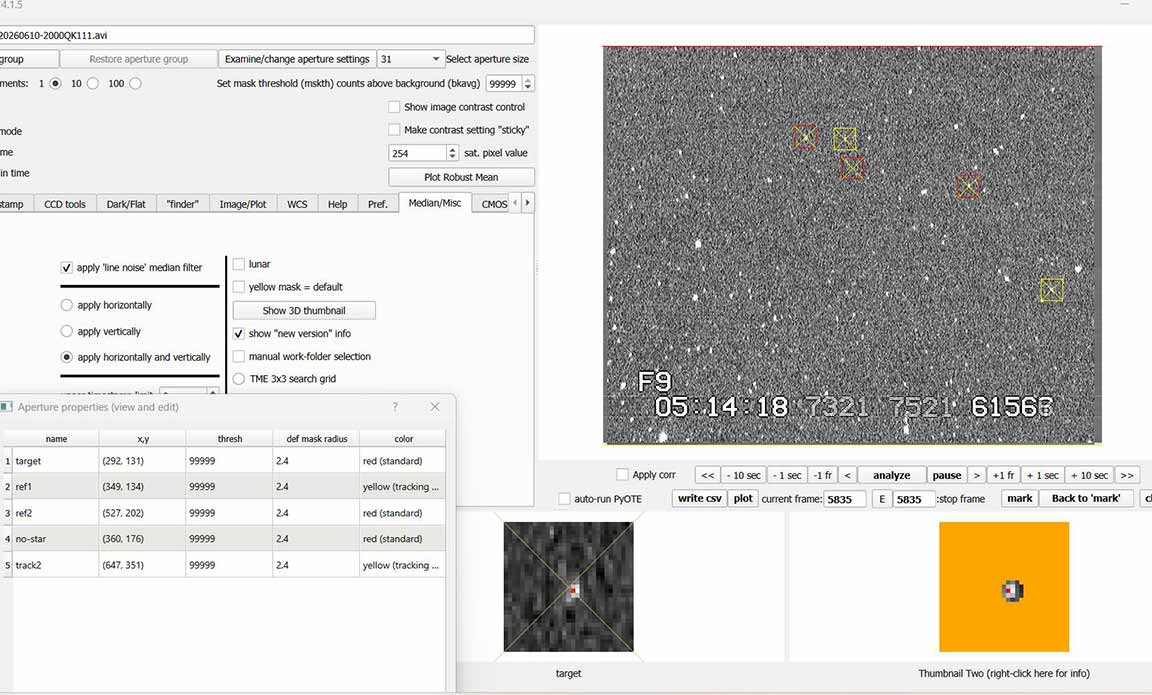
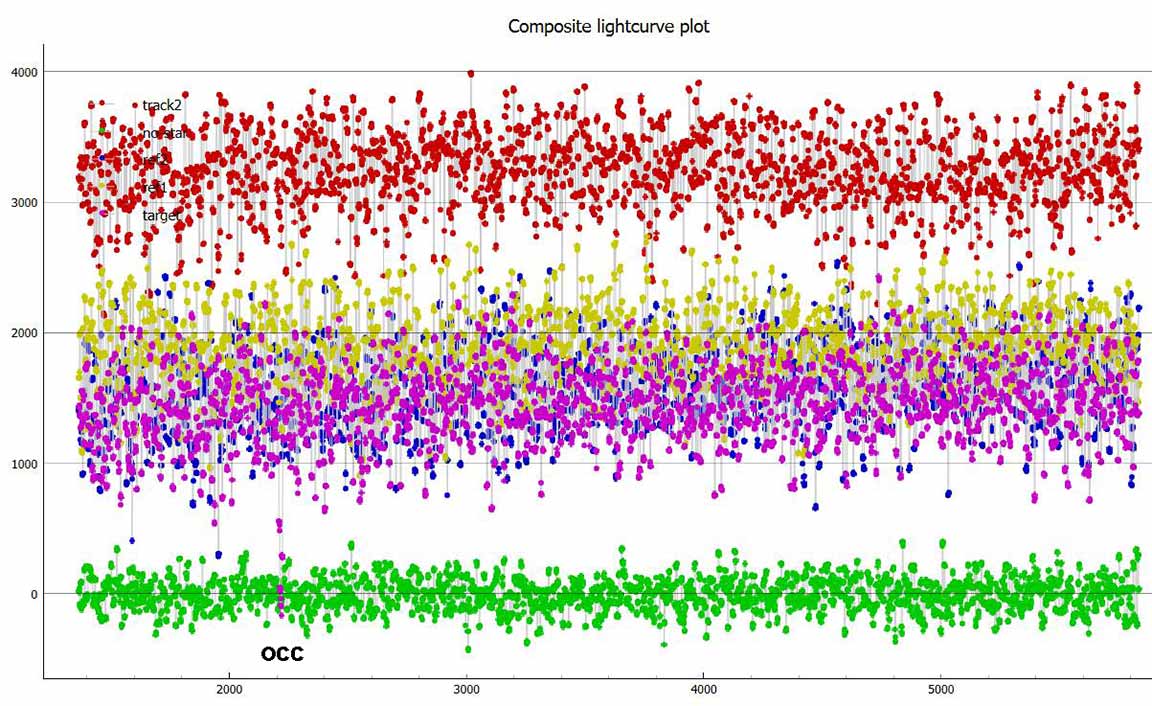
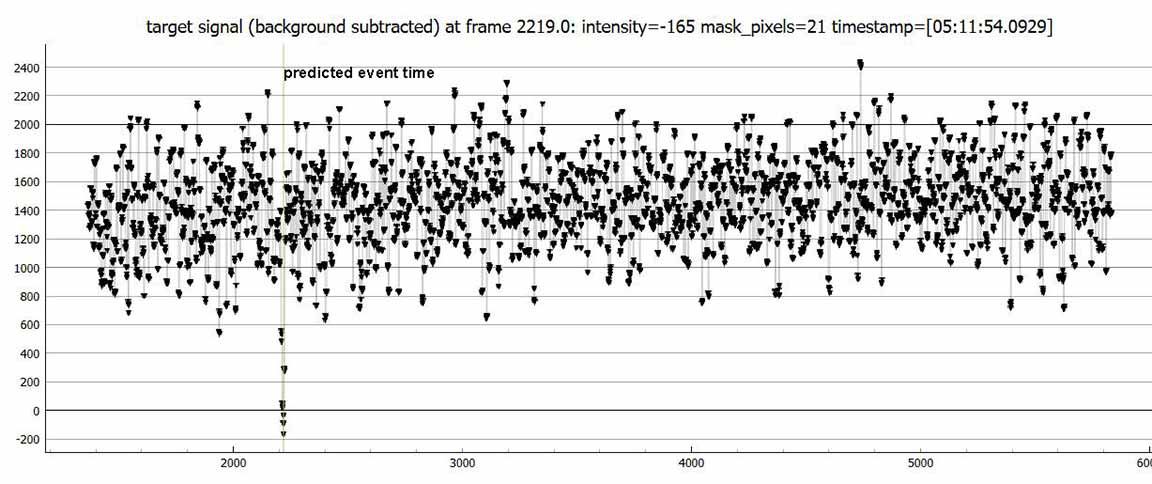
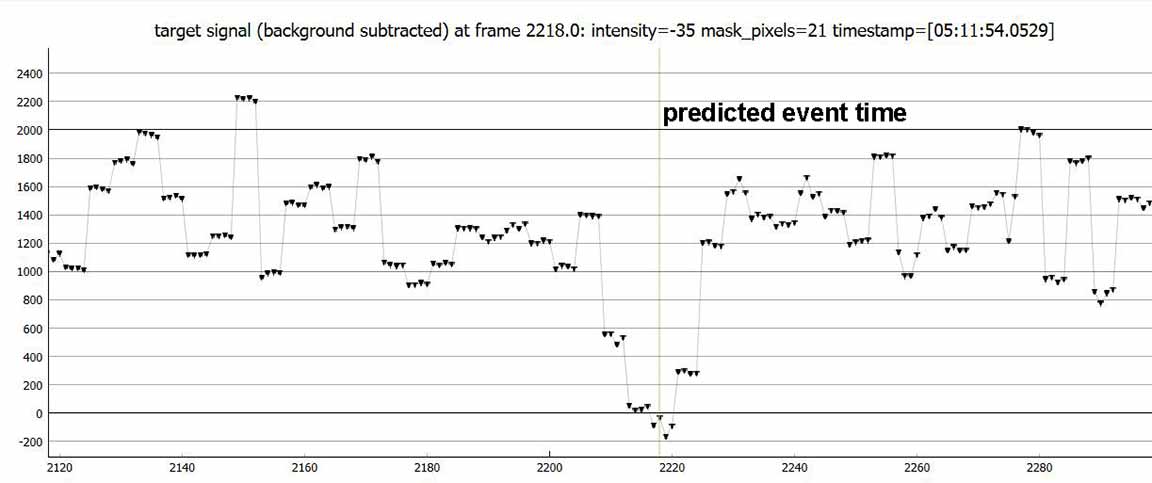
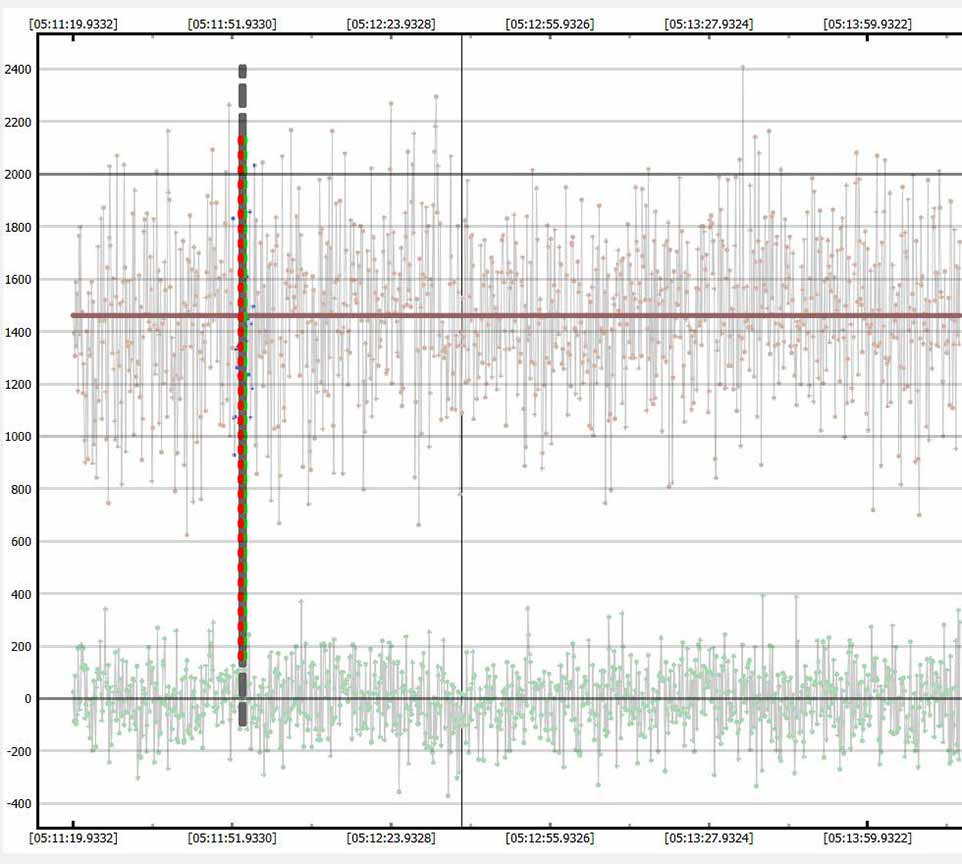
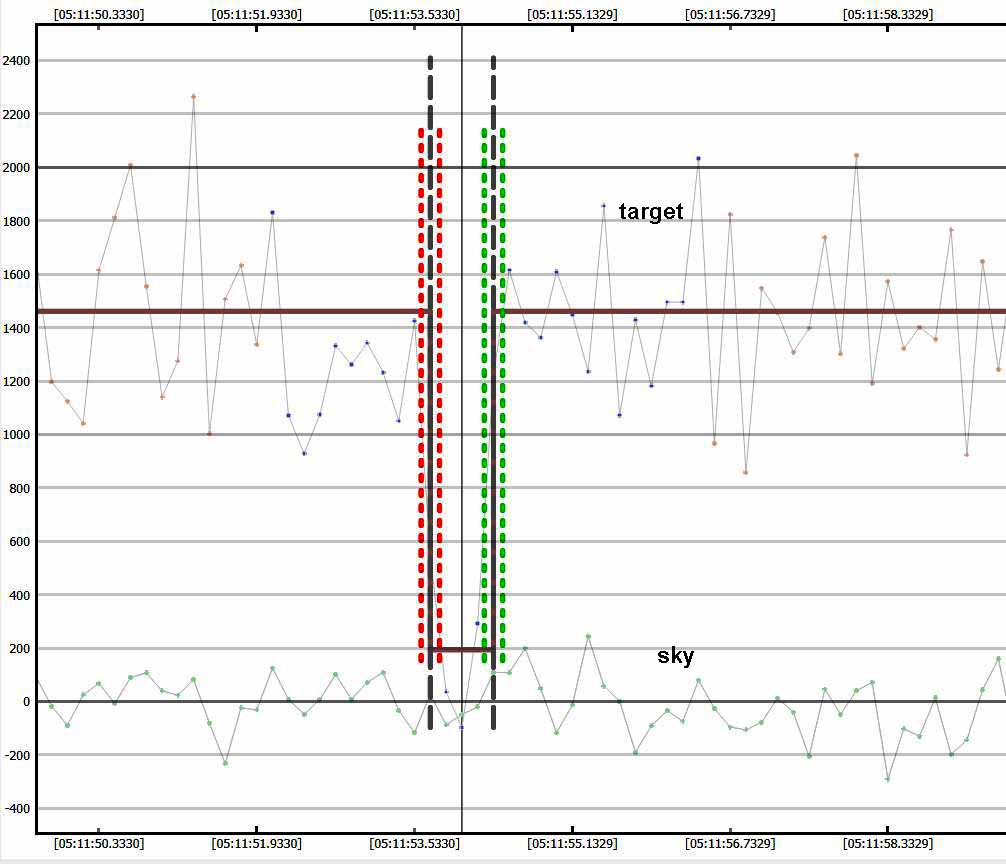
July 13 - reductions now done. And, luck was with me! The target was in the top left of my chip, but not ID'd, and I moved the telescope partway through the recording, still well ahead of the event time. And, it was stable tracking and target turned out to be nicely above center. I got a solid positive. Paire with Kirk's miss, it should help pin the astrometry.
 |
 |
 |
 |
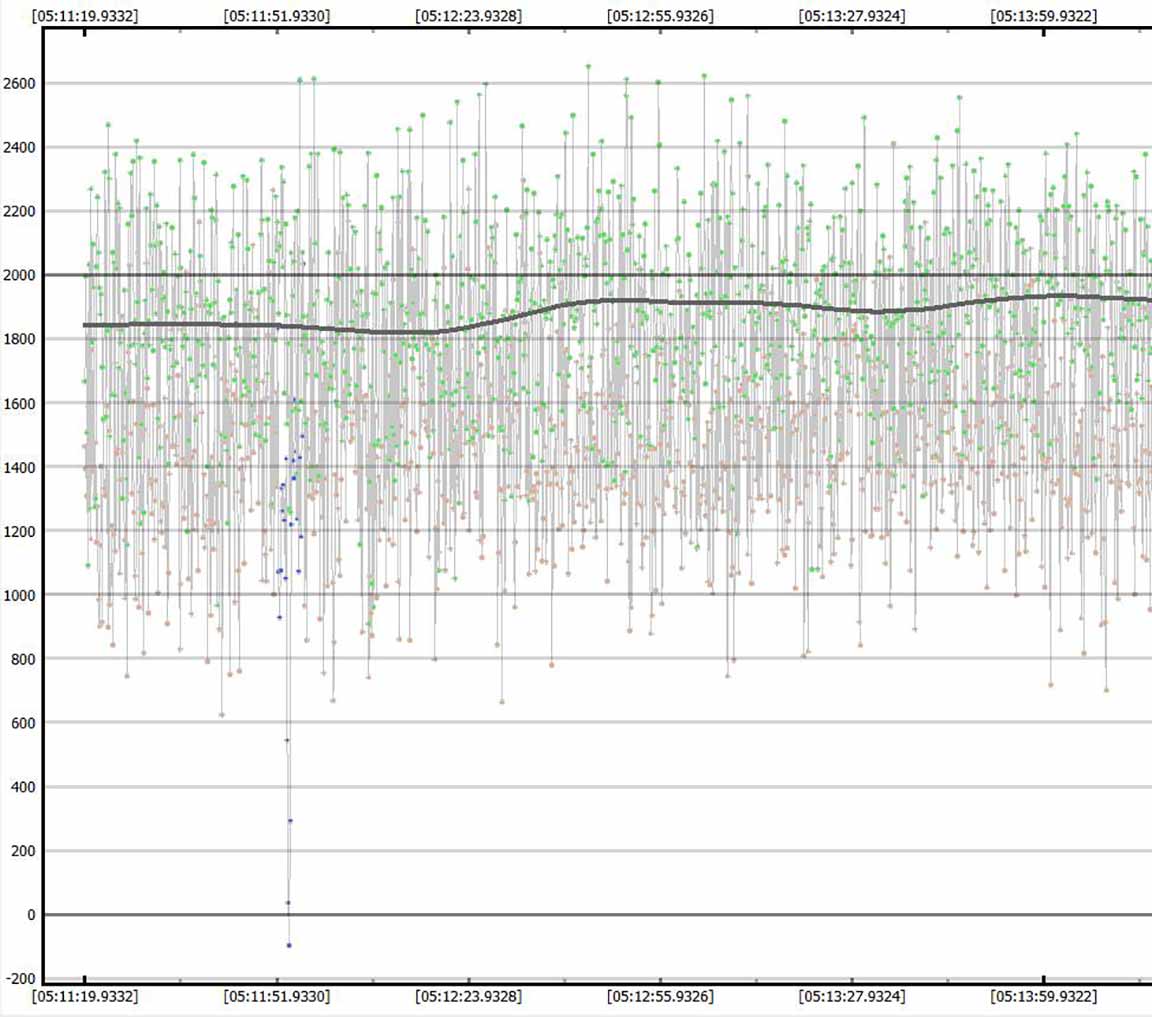
magDrop report: percentDrop: 86.7 magDrop: 2.194 +/- 1.593 (0.95 ci)
DNR: 4.44
D time: [05:11:53.6930]
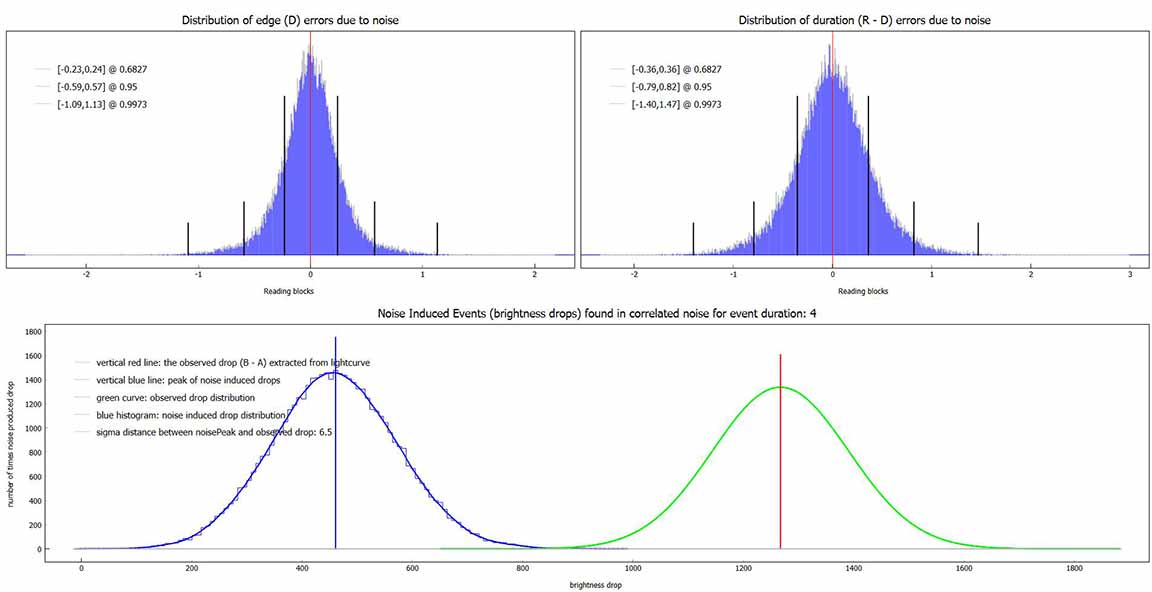
D: 0.6800 containment intervals: {+/- 0.0379} seconds
D: 0.9500 containment intervals: {+/- 0.0932} seconds
D: 0.9973 containment intervals: {+/- 0.1778} seconds
R time: [05:11:54.3329]
R: 0.6800 containment intervals: {+/- 0.0379} seconds
R: 0.9500 containment intervals: {+/- 0.0932} seconds
R: 0.9973 containment intervals: {+/- 0.1778} seconds
Duration (R - D): 0.6399 seconds
Duration: 0.6800 containment intervals: {+/- 0.0573} seconds
Duration: 0.9500 containment intervals: {+/- 0.1291} seconds
Duration: 0.9973 containment intervals: {+/- 0.2297} seconds
 |
 |
 |
 |
 |
 |
 |
 |
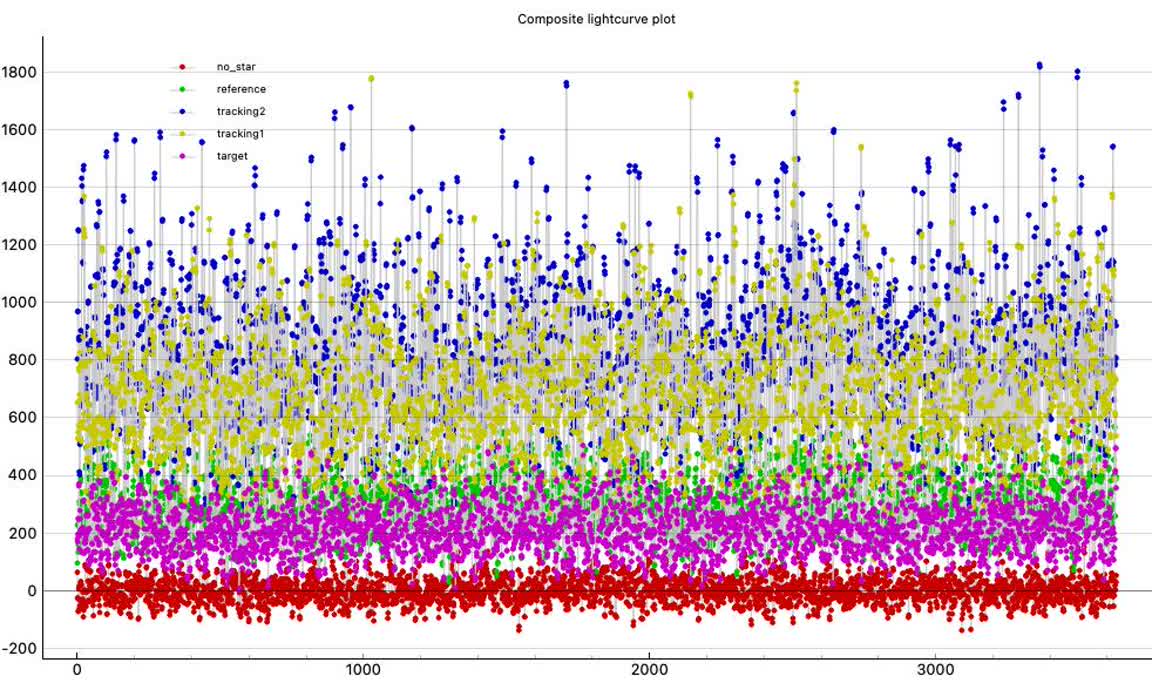
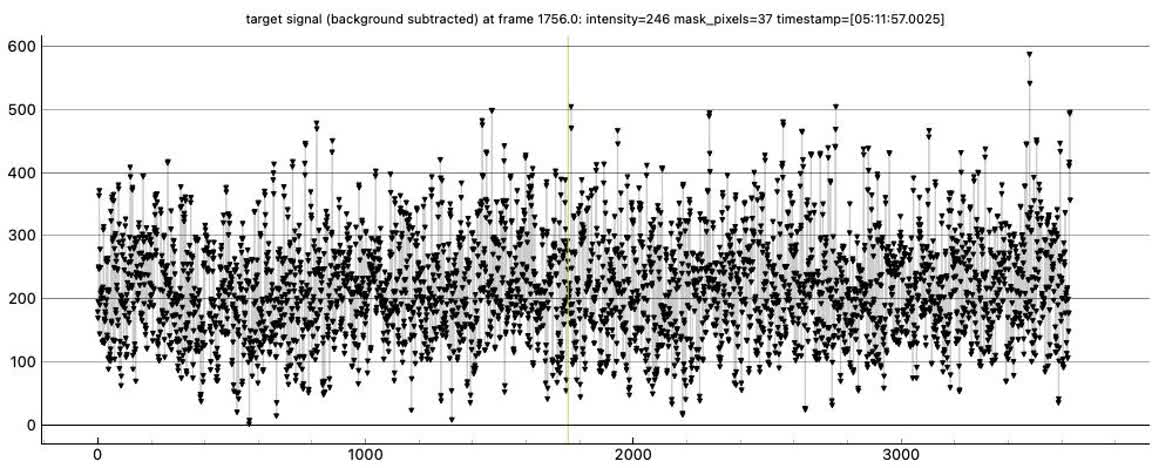
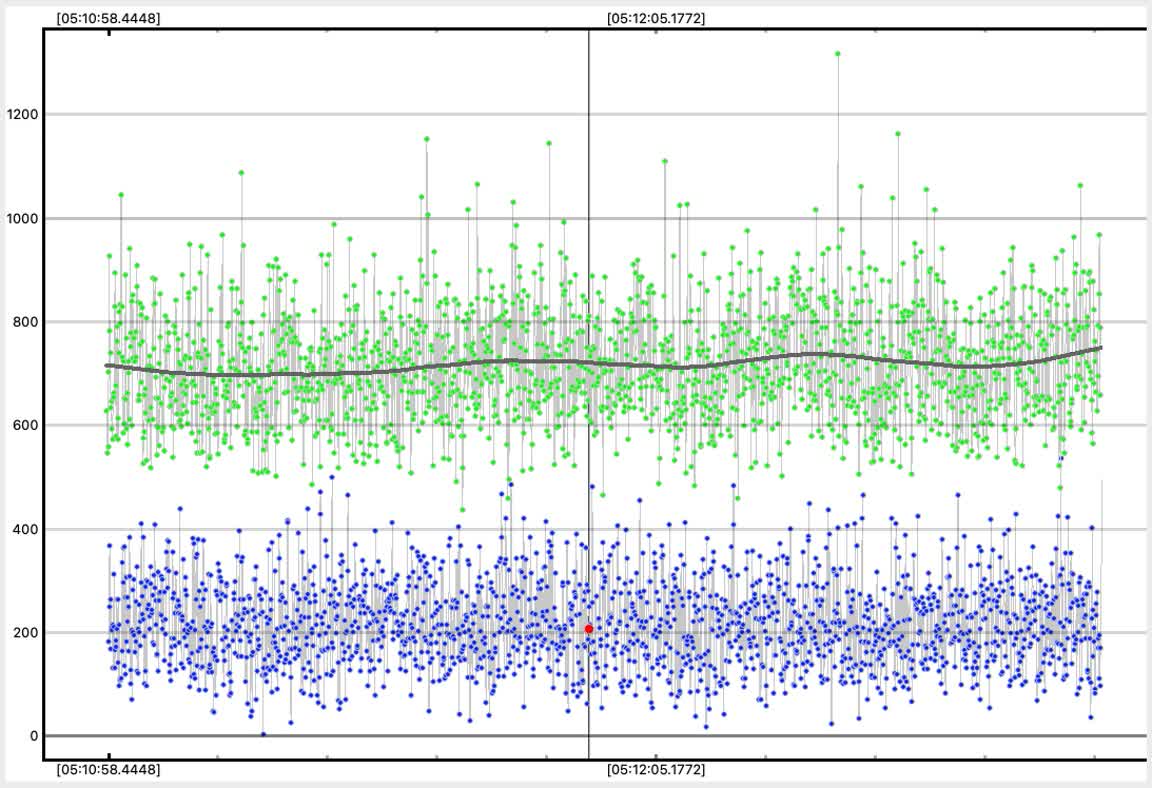
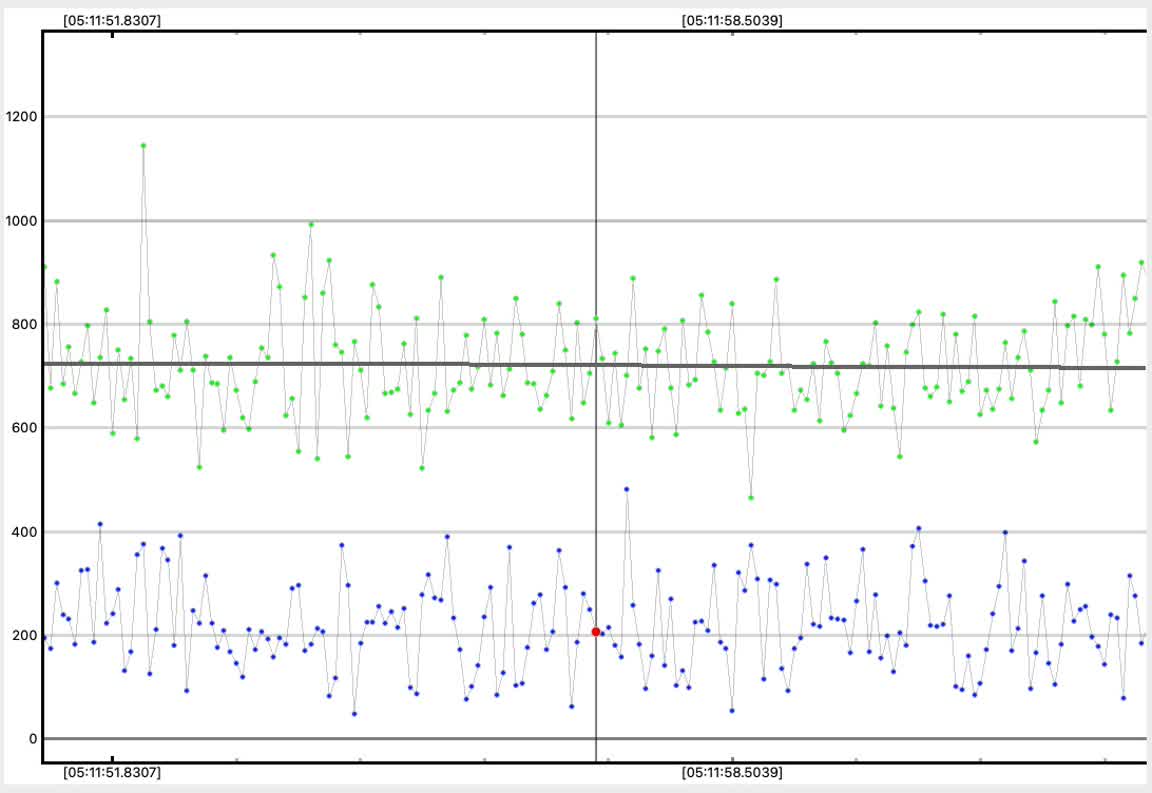
Looks like a miss for 2000 QK111, 4x, at Sharpe overlook on West Cliff drive, June 9. Target was 11 deg low altitude over the water, and dim and twinkling, but well above background. No apparent event. PyOTE detectability tool reports an event as short as 0.270s would likely be detectable, max predicted was 0.68.
 |
 |
 |
 |
 |